
A eucalyptus pole can be a quiet detail in a ceiling or the defining visual element of an outdoor gathering space. Before choosing a diameter or counting pieces, decide what the poles need to do: create a pattern, screen a view, form an overhead layer, or serve a role in an engineered structure.
Supply Scout has served the specialty building materials industry for 20 years, with our products used in thousands of completed projects. That experience informs our approach to material selection: connect the desired look with a clear specification, an installation plan, and delivery arrangements before placing the order.
For architects, contractors, and property owners planning resorts, restaurants, zoos, or themed attractions, the following decisions provide a practical starting point.
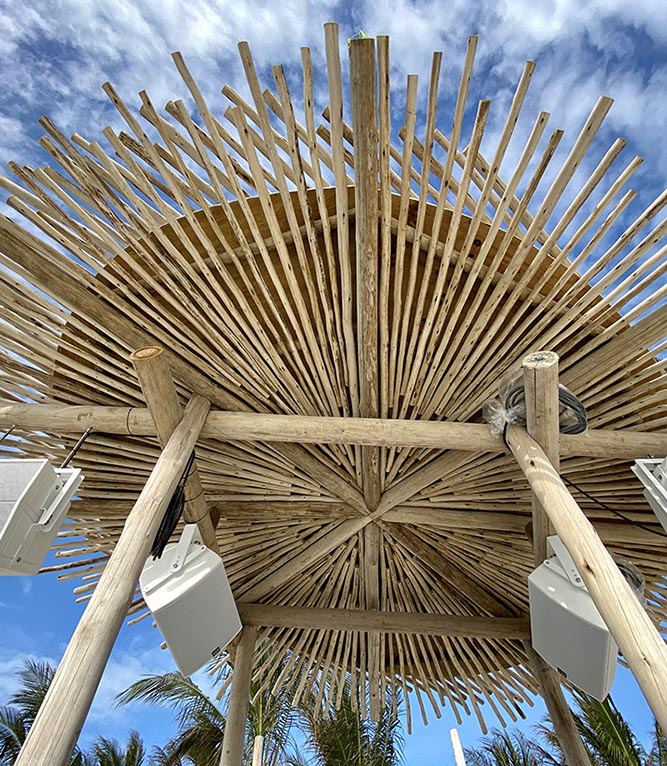
Start with the role of each pole
Separate appearance from function in the drawings. A decorative pole attached beneath a roof has a different job from a member carrying that roof. Label the intended use so the supplier, designer, and installer are working from the same brief.
For overhead features, coordinate attachment points, lighting, fans, sprinklers, and access for maintenance. For screens and partitions, consider sightlines, circulation, and how the ends will be finished. In animal areas, have the responsible zoo team review the proposed material, treatment, and assembly for the specific use.
Load-bearing members and safety barriers need project-specific design. A product photograph or a pole’s diameter alone does not establish an allowable span, load capacity, or suitable connection.
Choose dimensions with the whole design in view
Our eucalyptus poles are listed in diameters from 1 to 10 inches and lengths from 8 to 20 feet, with custom dimensions available on request. Confirm the specific diameter-and-length combination, quantity, and availability for your order rather than assuming every combination is stocked.
Define how diameter will be measured and what variation is acceptable. Ask about taper and straightness, particularly when poles must fit into sleeves, align with metalwork, or repeat across a highly visible ceiling. A nominal size on a schedule should not leave the installer guessing about the actual fit.
Distinguish the finished visible length from the ordered length. The installation detail may require extra material for connections or trimming. Have the installer confirm that allowance before quantities are finalized; do not use an arbitrary percentage for every design.
Set the visual standard before ordering
Eucalyptus poles have a natural surface with distinctive nodules. Rather than describing the goal only as “rustic,” share reference images and explain which details matter: the overall color, visible surface character, variation between pieces, and the appearance of cut ends.
For a prominent feature, ask about a sample or small mockup. View it from the distance guests will see it and under the intended lighting. A close-up photograph helps with surface selection; a wider view helps establish scale.
If the project includes both poles and fencing, coordinate them as separate items in the material schedule. Our eucalyptus fencing planning guide explains the different screening and boundary options.
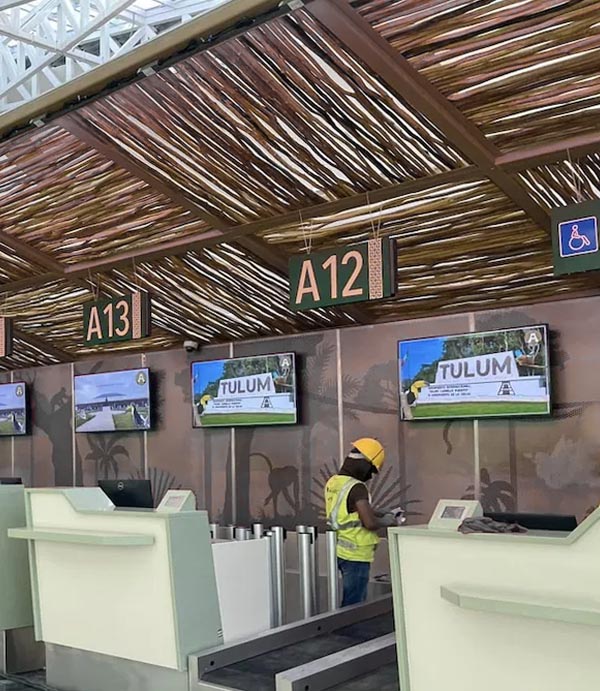
Plan spacing as carefully as pole size
In a decorative canopy, pole spacing affects the view of the sky and the pattern of light below. In a partition, it affects how much people can see through. Review the arrangement from the occupied space, not just as evenly spaced lines on a drawing.
Specify whether spacing means the clear gap between poles or the distance between their centers. These describe different layouts. For example, a restaurant mockup can help the team compare a more open overhead pattern with a denser one before committing to the full quantity.
An open pole layer should not be treated as a rainproof roof. If the space needs weather protection, coordinate the separate roofing system and its supporting assembly with the designer.
Match treatment and documentation to the location
Supply Scout offers pressure-treated eucalyptus poles. Tell us whether the proposed location is indoors, exposed outdoors, close to irrigation, or in contact with soil. Request the treatment documentation applicable to the material being quoted and have the project team confirm that it meets the intended exposure.
For projects with fire-performance requirements, establish the required standard and supporting documentation before purchasing. Do not assume that all treated poles have the same fire classification or that a rating applies to every installation.
Include care in the discussion. Ask for guidance on cleaning, any proposed finish, inspection, and handling site cuts or drilled holes. Coordinate those instructions with the installer and the property’s maintenance team.
Coordinate delivery with the installation team
Long poles need a workable route from the delivery vehicle to the installation area. Before confirming freight, identify truck access, unloading equipment, storage space, and any restrictions on deliveries to an operating resort or attraction.
Group the order by diameter, length, quantity, and intended location. Ask how bundles will be identified, and agree on a receiving check against the approved schedule. Confirm production and shipping timing before committing installation crews.
Prepare a useful request for a quote
A sketch and reference photos can start the conversation. For a more complete quotation, include:
- Project location, application, and indoor or outdoor exposure.
- Pole quantities by diameter and length, including any required tolerances.
- Drawings showing spacing, supports, connections, and finished ends.
- Appearance references and any treatment or documentation requirements.
- Target installation date, delivery address, and unloading arrangements.
Share your pole schedule or early design with Supply Scout. We can help you discuss material options and prepare a quote around the details of your project.